 Sunshine Days
favorites
Did we really just get through the first month of this new year? The holidays seem so long ago, but I will say it is good to get back into the routine. Of course, we were in the routine for one week & then all got sick in my house, so then we have had a week of lying around trying to get well!
Here's what I've read so far this year!

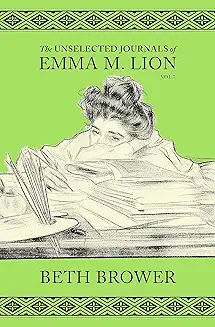
Yes, starting the year off strong! (You can check my previous book review post or 2 for some of my thoughts on this series so far.)
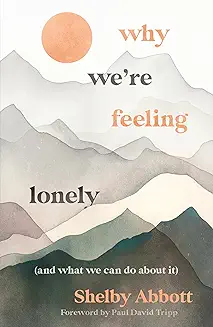
Addressing young adults, the author addresses a handful of the more prominent barriers that are creating this sense of loneliness in their circles. He follows each of those problems with a Gospel-based solution. While I may not be the target audience for this book, I can see its usefulness in spurring deeper conversations among young adult groups in churches. It might also give some talking points for conversations between Christian young people & the peers they know who are struggling with the disconnected feeling that seems to plague so many. (Many of these issues have been handled in more depth in other books, so if you are looking for more than a few pages on these subjects, you should look elsewhere.)
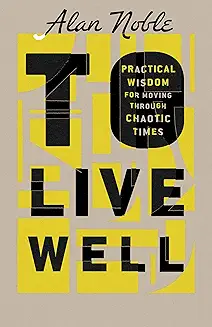
Having read On Getting Out of Bed by this author a little while ago, I was eager to request this book when it came up on NetGalley. In this book, Noble takes on the cardinal virtues as the structure for the answer to the question, "What does it look like to live well?" Living a life of faithful obedience to what God has commanded in His Word, namely the cardinal virtues--that is living well! Seems easy enough, right? But, as anyone will tell you, we will fail to live up to such lofty standards. But we have an example to follow--Jesus Himself! The author points us to the Gospel example of our Savior as the One who lived life well. His example & the indwelling of the Holy Spirit are what fuel our own attempts at living well. It's a very encouraging book for your own Christian walk. This would also be a wonderful book to study with your teenager with some great discussions on virtuous living.
When's the next one coming out?!
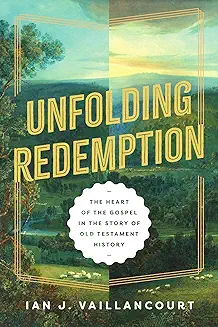
The Old Testament gets a lot of criticism. From progressives because they tend to see only the judgement of the sins & not the sins themselves nor the mercy extended by God. They find the God of the OT distasteful to their modern, enlightened sensibilities. For others, the books can feel ancient & tedious. Do we need to know the boundaries of each tribe's territory, Joshua? Do we need to chronicle the time of the Kings of Israel & Judah in 2 separate accounts? And don't even get us started on those genealogies! What do these books written many millennia ago have to do with my life in the 21st century? This book helps us see the Old Testament history books (the author has a book about the Pentateuch as well) as they fit into the grander story of God's redemption of mankind. Starting with some basic Bible history & explaining the way the Hebrew Bible was organized, Vaillancourt uses these scholarly instructions as he takes a look at Israel's history & how it tells a much grander story. I always appreciate when an author doesn't shy away from presenting topics you might learn in an academic setting. This type of instruction grows the reader's biblical literacy & it shows respect for the reader's abilities to make those connections independently (with insights from the Holy Spirit, or course). I would definitely recommend this book for your own Scripture study!
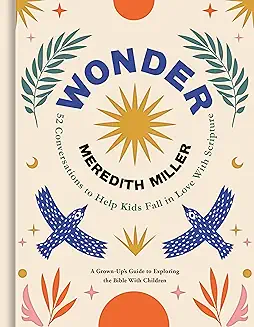
Before I write the review, let me start with a few things that I foundational areas where I do not agree with the author. First, she & her husband are lead pastors at a church. Many traditional Christian traditions (including the church where I am currently a member) do not allow women in places of leadership. Beyond that, I tend to get a little concerned when a couple are the sole leaders listed on a church's pastoral staff. That type of environment lacks oversight & checks on power. (That's not an accusation. I am simply saying something I've observed in other situations.) Second, the church where she is a pastor is affirming of non-traditional lifestyles. They even have a statement regarding this linked very prominently on their website. I hold to the traditional sexual ethic of God's design being a man & a woman in the boundaries of marriage. Those are hesitations before I even started reading! Once I read the introduction, another disagreement came up. Miller announces in her introduction that she plans to use they/them pronouns in reference to God. Her reasoning is that God is a spirit & thus does not have a gender. I am not as educated as Mrs. Miller, but I find this to be an unnecessary change to the traditionally-held practice of using masculine pronouns when referring to God. Perhaps I need to do more research on why this has become an issue. Last thing that I find concerning about this book is the author's stance on evolution. After the first story in the book--Creation--Miller has some important elements to point out to children & also includes possible questions the kids might ask. In response to a child asking, "What about evolution?" Miller's response is, "We can have both!" She goes on to explain that obviously the ancient author was not educated in the finer points of natural selection and couldn't know how the world would change over time. In reality, evolution does not allow for this "both-and" approach & neither does the Biblical account of creation. Evolution insists that this world happened in a series of mutations that managed to form each microscopic organelle in each microscopic cell. Our complex bodies were not made by any deity or outside force. They simply formed over millions of years & millions of mutations. Evolutionists don't include such "fairy tale" ideas as a benevolent creator into their explanations. They would also disagree with this halfway view. The Bible also does not allow for a half-baked idea of Creation. Jesus Himself is referred to as the Creator & Sustainer of life. "All things were created through him, and apart from him not one thing was created that has been created." John 1:3 CSB
I love the idea behind this book. I want to see my kids fall in love with Scripture. I want them to make connections (like between Babel & Pentecost). I want them to see the bigger story of God's redemption plan worked out through the story of human history. I want them to get to know this gracious & merciful God who is also just & holy. This book with its beautiful cover design & illustrations promises to help with those goals. The writing style here is so engaging, walking that fine line between retelling some hard stories in language that is easily understood. I really appreciate the notes after each story. They point out major themes & elements that really capture the main ideas of each story. There are context notes, too. These are some really great tools for families to be able to grow together in Biblical literacy. All of it is done in a winsome way motivated by a love for God & His Word. While this book does many of these things well, I have some very foundational disagreements with the author. Meredith Miller is in a more progressive area of Christianity, leaving room open for extra-biblical beliefs to become part of her doctrinal foundations. While she sticks closely to the Biblical accounts in this book, conservative audiences might appreciate doing a little more digging into the author & making their own decisions based on what they find. As with any book that you are using with your kids, do your due diligence & use your discernment!
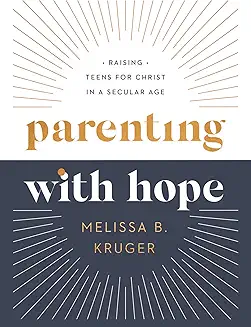
Definitely one of the more practical parenting books I've read in recent years! This book feels like a series of chats you might have over coffee with a mom whose kids are older & she's sharing her wisdom with you. The best part is that this wisdom is founded in the Bible, weaving Gospel hope into the quandaries we encounter as parents. Melissa Kruger isn't offering a formulaic version of parenting. She's pointing you to principles from God's Word that you need to apply daily as you disciple the child(ren) in your care. Highly recommend!
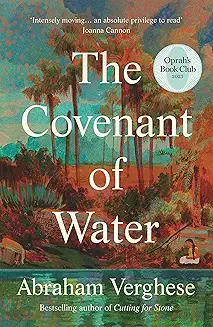
I checked this book out on a whim. The main character is an Indian Christian, part of the community that traces its roots back to the Apostle Thomas' journey to the region. She is a child bride who grows into a respected matriarch. She deals with love & loss & heartbreak. The title refers to a mysterious condition where men of her husband's family tend to have a dangerous relationship with water, usually causing their deaths. Many other characters are introduced, but they all lead back to this one family. This is a long novel with some truly interesting descriptions & historical notes. However, it was far too long. There were many parts that could have been edited without losing the heart of the story. Intimate scenes are never necessary, in my opinion, so I skip over those already. There were also a few terrible childbirth scenes. I mean, why do male authors feel like they have to write such horrible birthing experiences?! The story would have been much better with a more heavy-handed (& perhaps a female) editor! I do enjoy reading about other cultures & time periods that are less familiar. And Big Ammachi was a loveable central character who I was rooting for throughout.
Some of these books are releasing soon, so keep an eye out!
I hope you & your people are staying healthy (& warm)!
Cheering you on!

{Affiliate links are used in this post. Thanks!}
Enter your email to join the list and be among the first to hear about new shop items, special offers and blog posts.

Comments